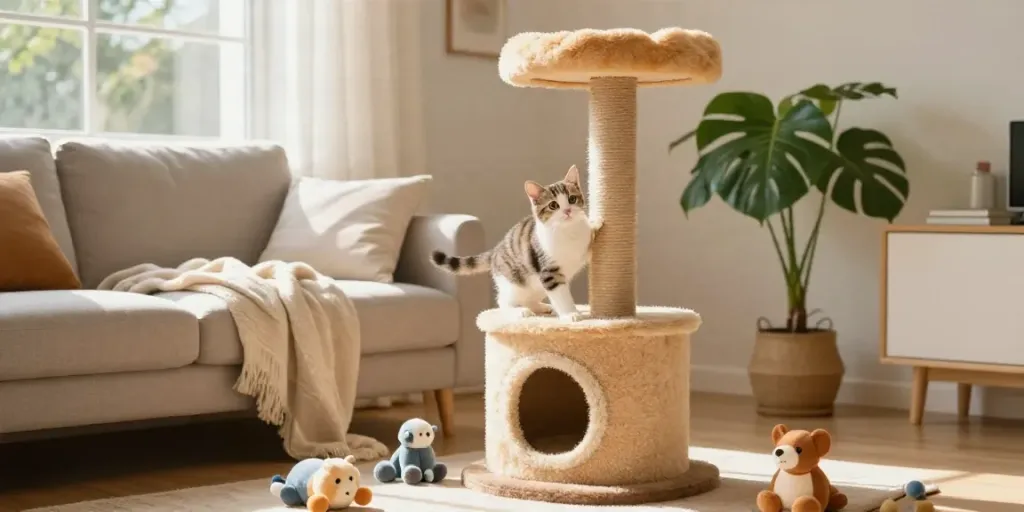
Understanding the Importance of a Cat Tree
Cat trees are more than just a luxury item; they serve as essential structures for enhancing your feline's environment. Cats are naturally inclined to climb and explore, so providing them with a dedicated space to exercise, play, and rest is vital for their mental and physical well-being. When exploring options, cat tree designs can help create a personalized playground that meets your cat's unique needs.
Why Cats Love Cat Trees?
Cats are instinctual climbers, and cat trees fulfill their need to ascend in a safe environment. Whether they're surveying their territory or retreating to a high perch to observe, these structures provide them with a sense of security. The height offered by cat trees allows cats to feel in control of their surroundings, a crucial aspect of feline behavior.
Benefits of Multi-Level Structures
Multi-level cat trees offer a variety of functionalities that enrich your pet's lifestyle. They provide multiple vantage points for your cat to explore and lounge, making them ideal for homes with more than one feline. These layered structures allow for social interaction between cats, reducing stress and promoting healthy play behaviors.
Choosing the Right Cat Tree for Your Home
Selecting the perfect cat tree involves considering your cat's personality, size, and your living space. For instance, larger breeds may require sturdier and taller options, while smaller cats might prefer compact designs. It's also essential to assess your home decor and pick a style that complements your interior while catering to your pet's needs.
Top Features to Look For in a Cat Tree
Materials That Enhance Durability
Choosing durable materials for your cat tree is crucial for longevity. Look for structures made from high-quality wood, as they can withstand the roughhousing of energetic cats. Additionally, fabrics like sisal and carpet can provide excellent scratching surfaces, ensuring your cat's claws stay healthy while preserving your furniture.
Design and Aesthetics for Your Living Space
A cat tree should seamlessly blend into your home. Many modern designs prioritize aesthetics, offering sleek, attractive structures that enhance your decor rather than detract from it. Consider the color and style of your furnishings when selecting a cat tree to ensure it complements your environment.
Safety Considerations for Cat Trees
Safety is paramount when it comes to selecting a cat tree. Ensure that the structure is stable and doesn't wobble when your cat climbs on it. Look for designs that have non-toxic materials and avoid sharp edges that could cause injury. Additionally, a good cat tree should have proper weight distribution to prevent tipping during play.
How to Set Up Your Cat Tree for Optimal Use
Ideal Placement in Your Home
Positioning your cat tree in a suitable location can significantly influence its usage. Cats are naturally drawn to high and quiet areas; placing the tree near a window or in a calm corner can encourage exploration. Make sure it's also easily accessible while being out of the way of high-traffic areas to prevent disturbances.
Integrating with Other Pet Furniture
When setting up your space, it’s beneficial to integrate the cat tree with other pet furniture, like scratching posts and beds. This encourages your cat to transition between different areas and facilitates a more enriching environment. An organized layout can help your cat feel at home and promote healthy behaviors.
Encouraging Your Cat to Use the Tree
Initially, your cat may be hesitant to use the tree. To encourage them, place treats or toys on various levels to draw them up. Engaging your cat with playtime around the tree can also create positive associations, prompting them to explore it further on their own.
Maintenance Tips for Longevity of Your Cat Tree
Regular Cleaning and Care Practices
Maintaining your cat tree is essential for hygiene and durability. Regularly vacuum the surfaces to remove fur and debris, and consider spot-cleaning with pet-safe solutions to keep it fresh. Depending on the materials, some parts may be machine-washable, so checking the manufacturer’s guidelines can provide additional care tips.
Repairing Worn-Out Parts
Cats can be tough on furniture, and over time, parts of the cat tree may wear out. It's important to replace any damaged components, such as scratching posts or upholstery, to maintain the tree's integrity and safety. Many manufacturers offer replacement parts, making it easier to keep your investment in good condition.
When to Replace Your Cat Tree
Even the best cat trees have a lifespan. If you notice excessive wobbling, damage, or that it no longer provides adequate support, it may be time to consider a replacement. A well-maintained cat tree can last several years, but proactive care will help you recognize when it’s time to upgrade.
Future Trends in Cat Tree Design and Functionality
Innovative Materials and Technologies for 2026
The future of cat trees is looking bright with advancements in materials and design. We can expect to see more eco-friendly options, combining sustainable resources with high durability. Innovations may also lead to lightweight structures that are easy to move, catering to home decorators looking for flexibility.
Smart Cat Trees: Integration with Technology
As technology continues to evolve, we may see smart cat trees equipped with features such as built-in cameras, activity trackers, and interactive elements that engage cats during play. These tech advancements can cater to the increasing demand for entertainment and enrichment in pet products.
Sustainability in Cat Furniture Design
With growing awareness of environmental issues, there is a shift towards sustainability in pet furniture. Expect to see more cat trees made from recycled materials and non-toxic finishes, offering both safety for pets and a responsible choice for their owners.
Do cat trees really enhance feline welfare?
Research shows that cat trees significantly contribute to a cat's overall well-being. They provide physical stimulation, promote healthy scratching behaviors, and offer safe spaces for retreat and observation. Investing in a quality cat tree can lead to happier, more fulfilled cats.
What features should I prioritize in a cat tree?
When selecting a cat tree, prioritize stability, material quality, and height. Ensure it has multiple platforms for climbing and resting and includes scratch posts made of durable materials. Designs that allow for interactive play and those that fit your home decor are also important considerations.
How much do cat trees typically cost?
Cat tree prices can vary widely depending on size, materials, and brand. Basic models start around $50, while larger, more elaborate designs can reach upwards of $300. It's beneficial to set a budget while considering the long-term investment in your cat's health and happiness.
Are cat trees suitable for all cat sizes?
Most cat trees are designed with various sizes in mind, but it's best to choose one based specifically on your cat's breed and weight. Larger breeds, like Maine Coons, may need sturdier trees to support their weight, while smaller breeds can comfortably fit in standard designs.
How can I encourage my cat to use their tree?
Encouraging your cat to use the tree involves patience and positive reinforcement. Introduce them to their new playground with toys and treats, and engage in playtime around the cat tree. Over time, they will likely explore it more on their own.